
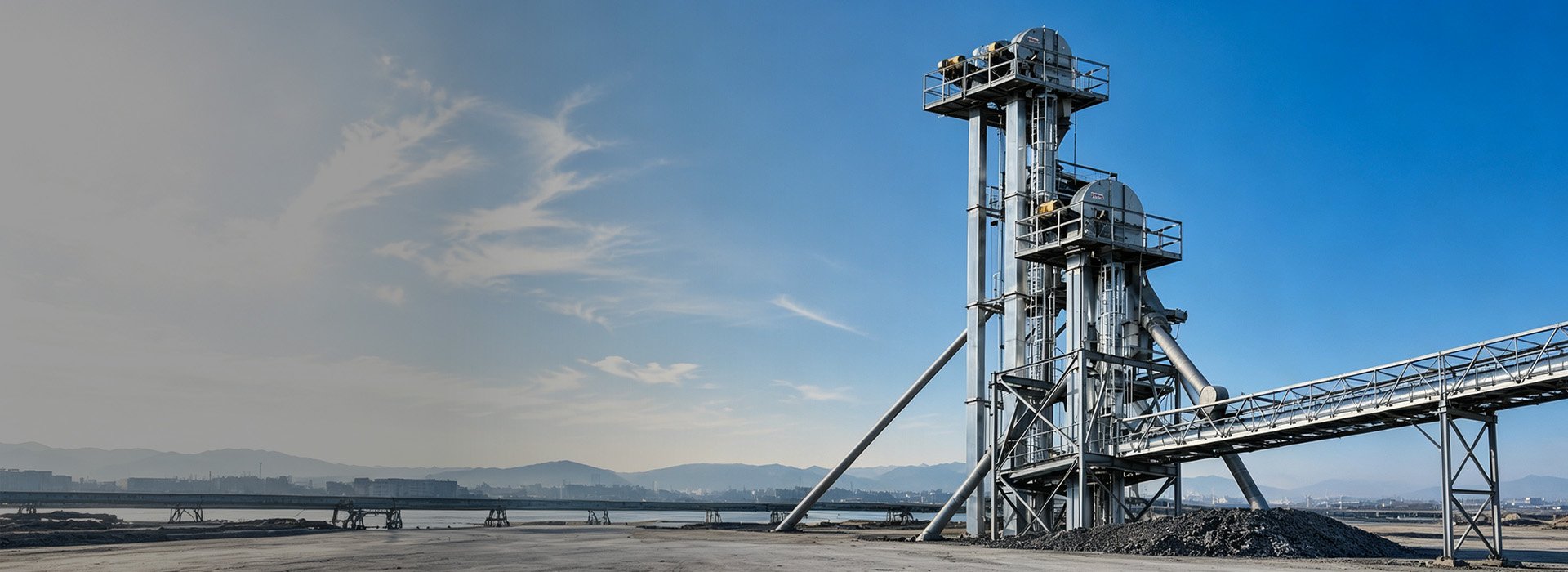
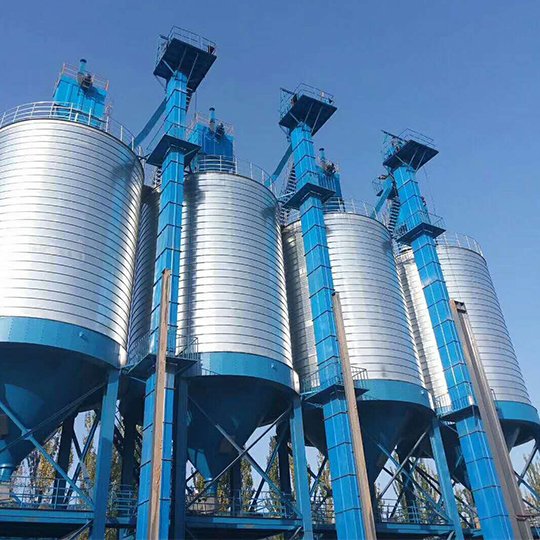
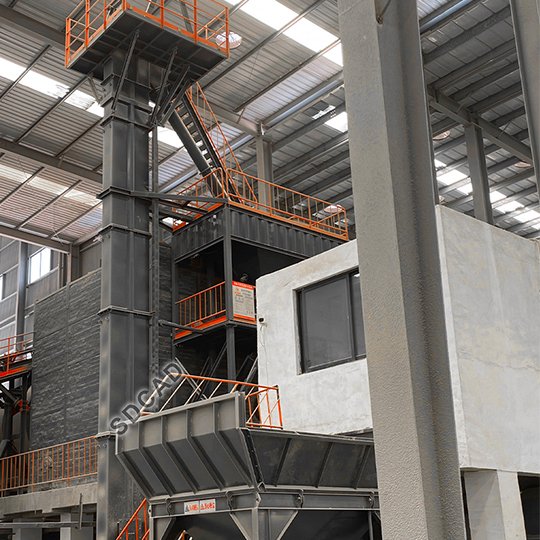
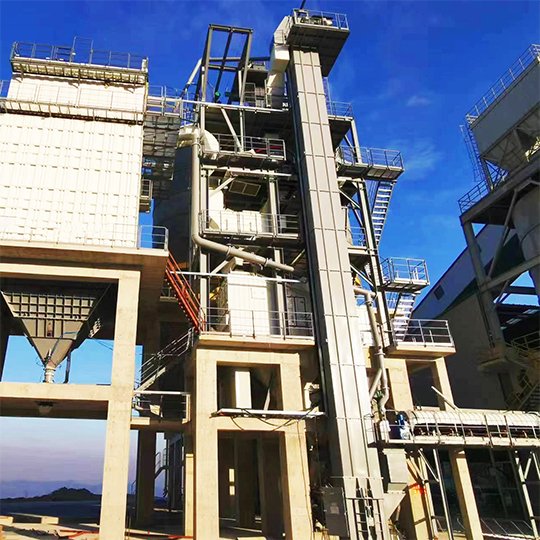
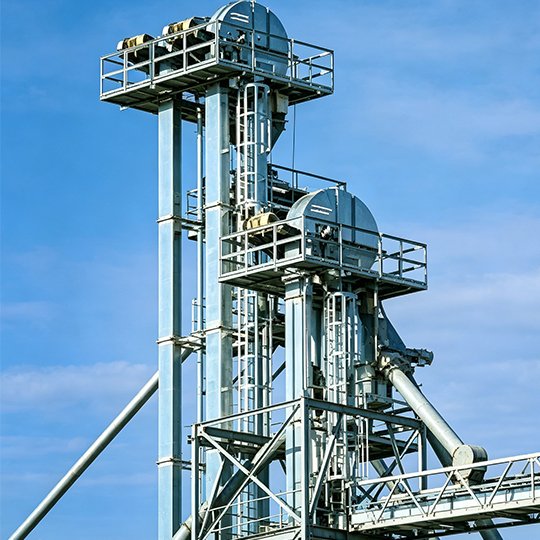
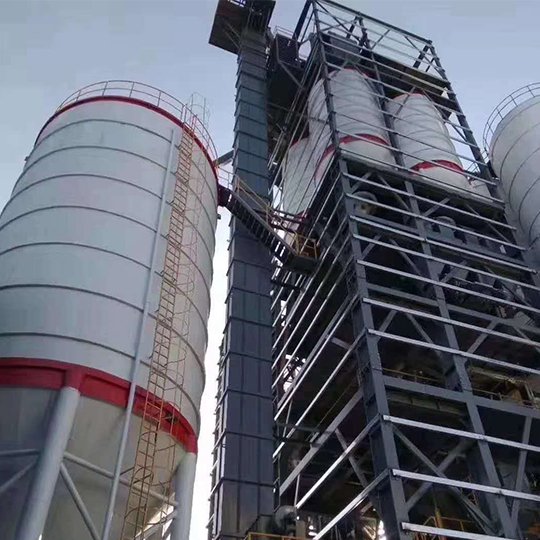
Why Choose SDCAD Bucket Elevator?
- The conveying efficiency is high and suitable for powdered, granular, and abrasive materials
- Adopts gravity feeding and gravity-induced discharge design to reduce material spillage, poor discharge, and return
- Features a high-strength steel structure design to ensure the equipment operates long-term and reliably.
- Adopts high-quality wear-resistant plate chains to improve the equipment reliability and usage time。
- Designed with energy-saving type efficiently reduces material friction and the equipment energy consumption
- Adopts a fully sealed design to significantly reduce dust leakage and keep the workplace clean.
What is Bucket Elevator?
The bucket elevator is used with silos. It can elevate materials from a lower position to a certain height to achieve materials transfer. According to the lifting mechanism. the bucket elevator can be divided into belt bucket elevators, chain bucket elevators, slat-chain bucket elevators.
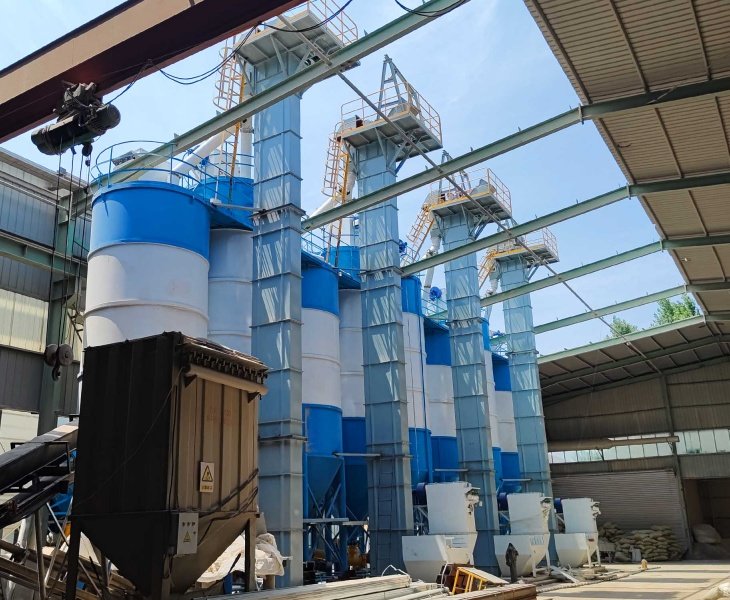
Your professional Bucket Elevator Supplier
Frequent repairs and replacement of components not only increase costs but also affect production efficiency. Our bucket elevators adopts a packaged sprocket design. You only need to replace worn components of the elevator to restore equipment performance, with no requirement for overall replacement. This greatly cuts spare parts expenses and maintenance downtime.Meanwhile, its completely sealed ISO-standard casing can effectively prevent dust from entering the equipment, reduce component wear and further extend the equipment’s service life. Contact us immediately to customize an efficient and low-maintenance bucket elevator solution for your material conveying project.
Our Bucket Elevator Type
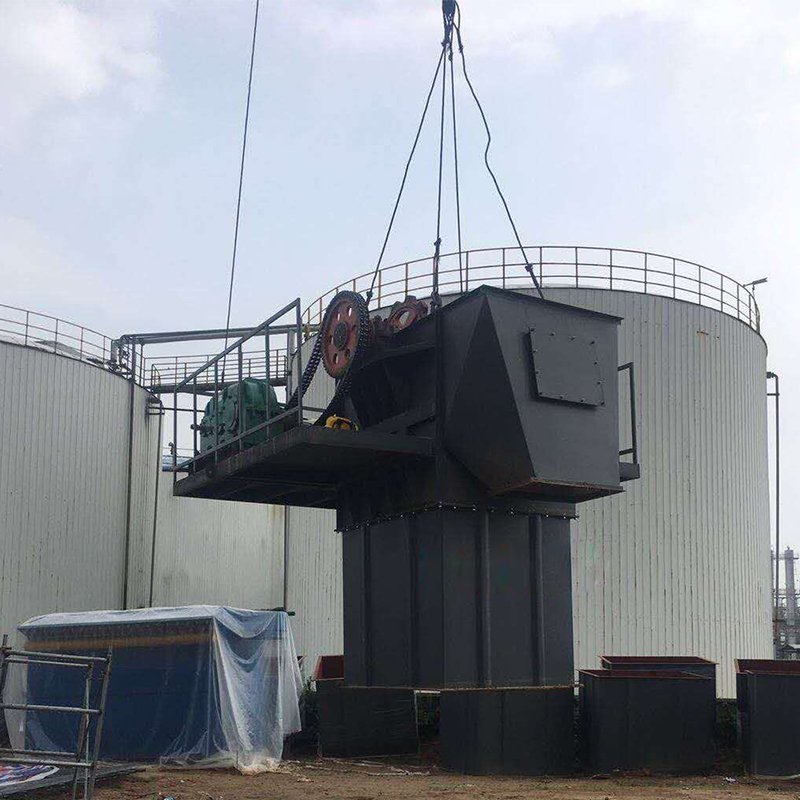
It is suitable for continuous conveying of various materials and operates stably without material backflow. Its sealed and wear-resistant structure extends the service life of bucket elevator and reduces maintenance costs.
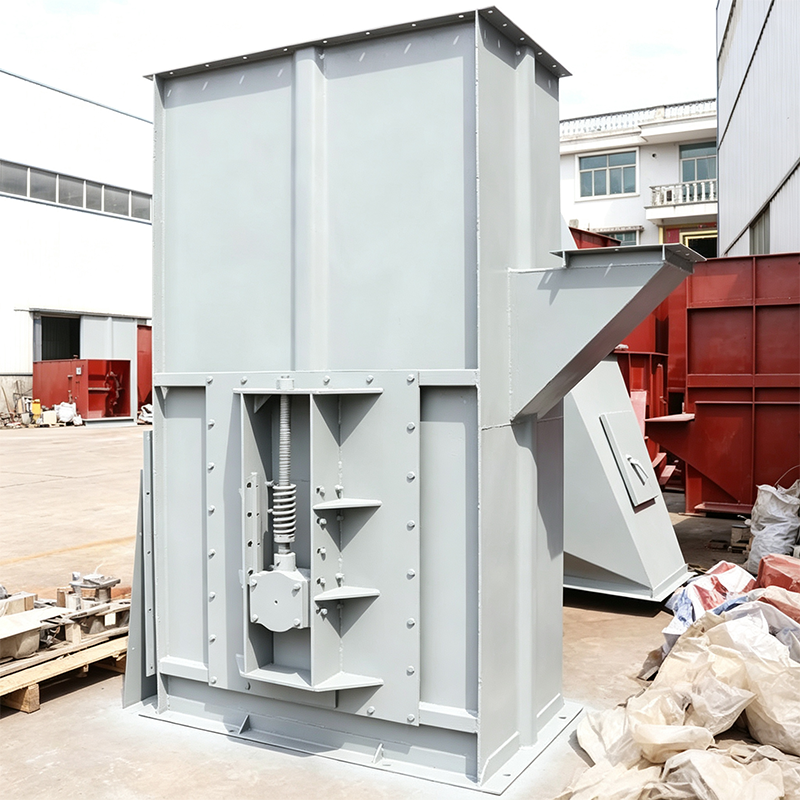
Our bucket elevator can convey powder, granular and small block materials. It operates smoothly with low noise and is easy to maintain, meeting your continuous and efficient conveying needs.
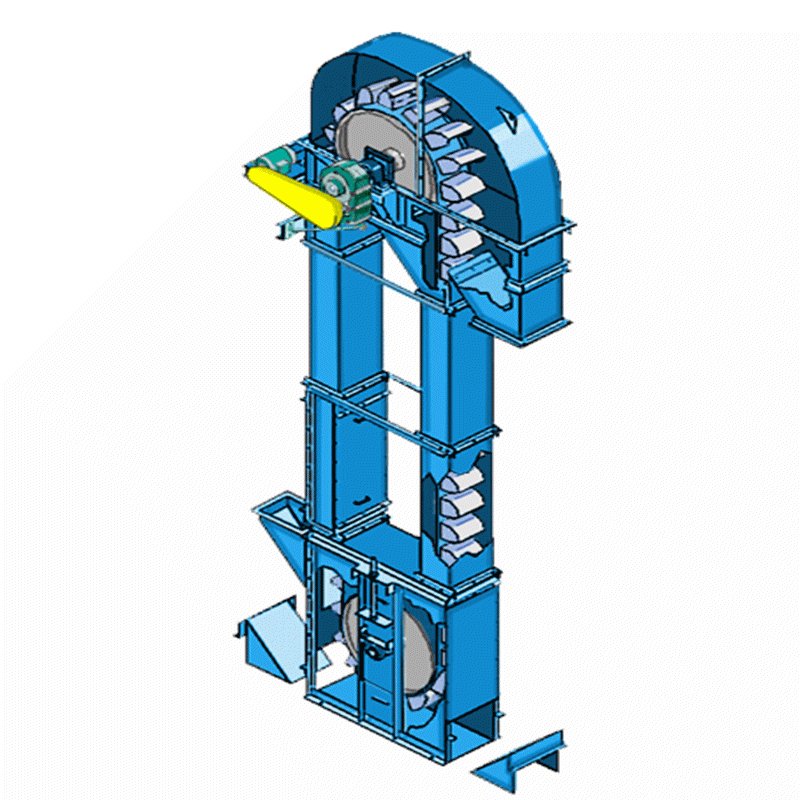
Designed to advanced standards, our bucket elevator features fast lifting speed, large throughput and high lifting height to meet your demands for continuous vertical material conveying in cement, grain, chemical and other industries.
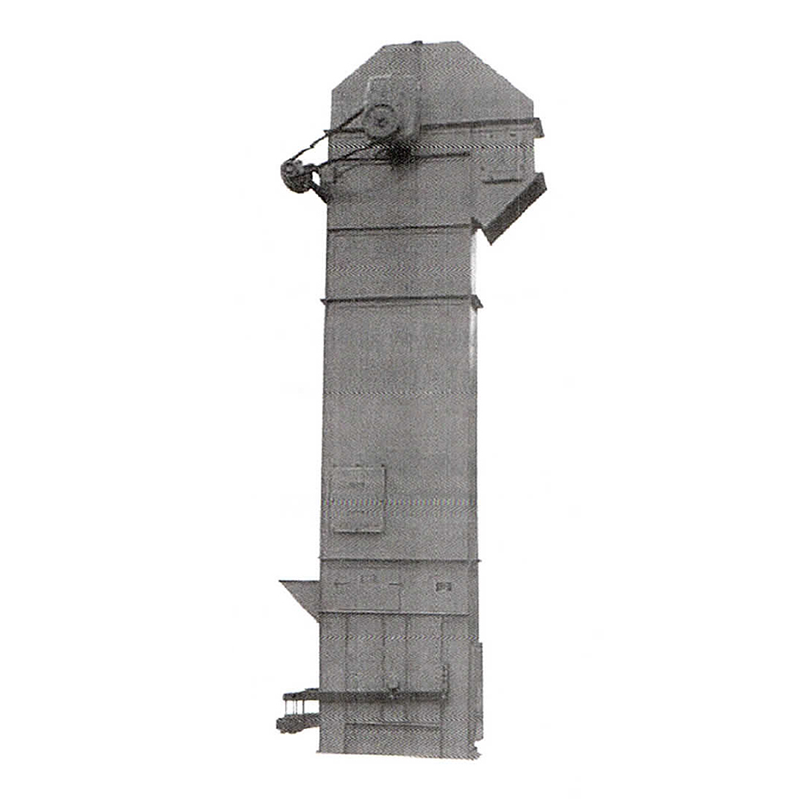
HL-Type Bucket Elevator can handle high-temperature and abrasive materials. It not only has outstanding load-bearing capacity and smooth operation, but also has a longer service life.
The Advantage of SDCAD Bucket Elevator
SDCAD Bucket Elevator is professionally designed to consistently vertical conveying of powdered, granular, and small-lump materials. They are widely used in cement, mineral powder, lime powder and so on. Conveying capacity ranges from 10 tons to several hundred tons per hour. The bucket elevator adopts high-strength structure, intelligent protection system and reliable conveying solution, helping you achieve higher conveying efficiency, lower maintenance cost, and long-term reliable operation.

The bucket elevator adopts the hardened-gear-surface speed reducer features a direct-drive configuration and is equipped with a fluid coupling, a slow-speed maintenance motor, and a backstop. It can achieve equipment reliable operation and conveying, lower equipment impact and maintenance cost.

Head pulley adopts automatic self-aligning structure and is equipped with high-quality rubber-lagged roller. This system can improve friction, extend using time, and efficiently reduce belt mistracking and wear.

The bucket elevator adopts optimized dual-channel casing design which can efficiently reduce airflow interference and improve conveying reliability. The reinforced structure further enhances the reliability and durability of the equipment.

The equipment is equipped with protect installations belt misalignment detection, material level control, and rotation monitoring. When the equipment an abnormal condition occurs , this system can sends an alarm signal to the control system which can ensure the equipment stable operation.
High-Strength Steel-Cord Belt for Higher Performance
SDCAD steel-cord rubber belt bucket elevator adopts a high-strength steel-cord rubber conveyor belt as the traction component, helping you overcome the dynamic loads generated by chain and sprocket drives. Compared with a chain bucket elevator, our steel-cord belt is lighter and more stable, allowing higher operating speeds and greater productivity. Under the same production capacity, our bucket elevator features high operating speed and low self-weight, which reduce the load on both the conveyed material and the traction system, helping you efficiently reduce the equipment footprint and conserve energy.
At same time, the bucket loading process has shock-absorbing effect because of the adhesive tape own good elasticity, enabling you extend the equipment service time. Steel-cord belt bucket elevator adopts high-strength steel cord conveyor belt which can efficiently improve your equipment hoisting height and conveying capacity.
Why Choose SDCAD Bucket Elevator?
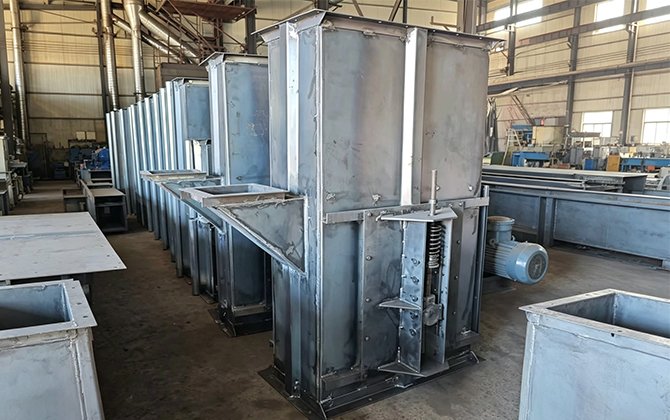
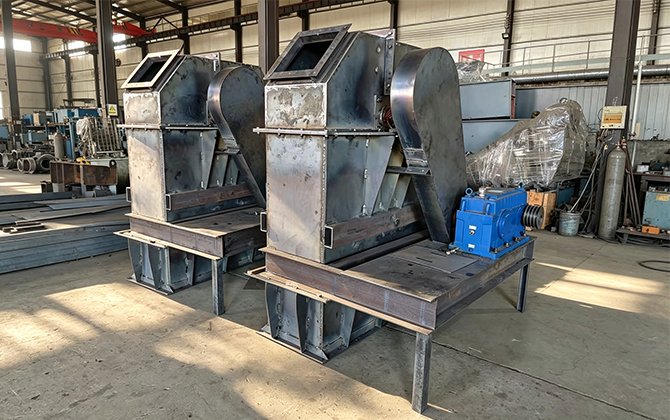
Our factory covers an area of 3,000 square meters and employs 45 production staff. We have a professional design team of 8 members and 5 engineers dedicated to overseeing overseas installation crews, who are available to process visas at any time to provide on-site installation services for you. It is a high-tech enterprise and serves as a council member of the National Pipeline Material Conveying Committee, as well as a technical committee member of the National Chemical Powder Engineering Design Center and the Sinopec Group Powder Engineering Design Center. It ranks among the world’s leading companies in scientific research and development, as well as system design and manufacturing, in the fields of powder engineering, pneumatic conveying, and metering and batching.
What Our Client Say
“The bucket elevator runs very smoothly and has been extremely reliable. It has improved our conveying efficiency while reducing maintenance.”
 Thiago Ataíde
“We’re impressed with the build quality and stable performance. The installation was straightforward, and the system works exactly as promised.”
 Quốc Tuấn
“Compared with our previous chain elevator, this one is quieter, more energy-efficient, and much easier to maintain. A great investment for our production line.”
 Tim Allan
We offer four main types of bucket elevators:
- TD-type Bucket Elevator – Belt-type design, suitable for handling materials with low abrasiveness and moderate temperatures.
- TH-type Bucket Elevator – Ring-chain design with excellent wear and heat resistance, ideal for medium-sized materials.
- NE-type Bucket Elevator – Plate-chain design with gravity feeding, offering high conveying capacity and low material breakage.
- Z-type Bucket Elevator – Continuous rotating bucket design for horizontal–vertical–horizontal conveying with minimal material damage.
Each type is suitable for conveying powdered, granular, and small lump materials (up to 50 mm). Our engineers can recommend the most suitable model based on your material characteristics and production requirements.
A bucket elevator uses a drive system to move a traction component, such as a belt, chain, or steel-cord belt, in a continuous loop. Buckets attached to the traction component pick up material at the bottom, lift it to the top, and discharge it by gravity or centrifugal force. The empty buckets then return to the bottom to repeat the cycle, providing continuous and efficient vertical conveying.
For belt bucket elevators, the buckets are mounted on a rubber belt that runs over the head and tail pulleys. Chain bucket elevators use parallel chains and sprockets to drive the buckets. Most bucket elevators feature an enclosed casing to minimize dust emissions during operation.
You can first refer to our standard models and technical specifications. If none of the standard models meet your requirements, we can provide a customized solution.
To recommend the most suitable model, please provide:
- Material name and characteristics
- Material size and bulk density
- Required conveying capacity
- Lifting height
- Material temperature
- Installation layout (if available)
Our engineers will recommend the best solution based on your application.
Bucket elevators are supplied in sections for convenient transportation and installation.
For standard models, you can complete the installation by following our installation manual. For large-capacity or customized bucket elevators, SDCAD can arrange experienced engineers to provide on-site installation and commissioning services.
Our sales and engineering teams will work together to recommend the right model and prepare a quotation. Once the solution is confirmed and the deposit is received, production will be scheduled.
During manufacturing, we provide quality inspection reports, and third-party inspections are also welcome. After inspection, we arrange shipment, installation, commissioning, and after-sales support under our warranty service.
Related Product
 Cement Silo
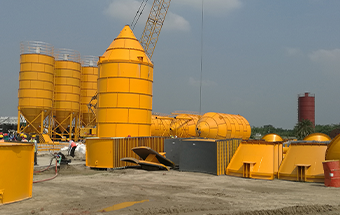
Cement silos, as the most common discharge points in pneumatic conveying systems, are widely used for storing powdered or granular materials, with capacities ranging from 50 to 2,000 metric tons. We can provide you with these silos.
How to Replace the Belt on a Bucket Elevator
Industrial bucket elevators are used frequently and carry heavy loads, so wear and tear is inevitable with prolonged use—the most common issue being belt wear. Many customers are unsure how to replace the belt, so today, the SDCAD editorial team will provide a brief guide.
First, transport the new belt to the tail end of the bucket elevator. Open the inspection hatches on both sides of the tail end, and disconnect the old belt from the tail pulley through one of the hatches. Then, connect the prepared new belt to the corresponding end of the old belt through the same inspection hatch. An operator should manually rotate the machine at the head pulley until the old belt has been completely fed out through the other tail inspection port. At that point, disconnect the joint between the new and old belts, and finally connect the two ends of the new belt.
The method we describe here is quite convenient: replacing the bucket elevator belt by manually turning the drum avoids the need to remove the guard cover at the head pulley. The entire process is simple and easy to perform, offers a high level of safety, requires minimal downtime, and does not disrupt normal production.
Methods for Cleaning a Bucket Elevator
In non-food industries, cleaning is generally not required if the same material is being conveyed. However, cleaning is necessary if the equipment has been idle for an extended period, if the material is corrosive, or if different materials are to be conveyed. Running the bucket elevator continuously on an empty cycle is usually sufficient to clear material from the buckets. For thorough cleaning, a blower can be used after opening the bottom access hatch of the bucket elevator.
Impact and Solutions for Bucket Deformation in Bucket Elevators
Due to bucket elevator failure, the buckets undergo bending deformation, which inevitably affects normal operation. Therefore, there is an urgent need to address the deformation of the buckets. Currently, there are two main simple and effective improvement methods: one is to add partially serrated buckets, and the other is to install reinforcing ribs between the front and rear panels of the buckets.Through comprehensive analysis, it is well known that the primary cause of bucket elevator failure is the formation of material clumps. However, existing bucket elevator buckets are unable to transport clumped material in a timely manner, leading to a series of equipment issues.Since bucket elevators use flat buckets, they cannot break up the clumps, and thus are unable to transport clumped material. The key to solving this problem lies in automatically breaking up the agglomerated layer during operation so that the broken material can be transported away. But what specific measures should be taken?
In this case, one toothed bucket can be installed for every 10 buckets in the bucket elevator; furthermore, the flat opening at the front of the bucket can be modified into a zigzag shape. When the hardness of the agglomerated layer is not too high, this design can break it up, allowing subsequent buckets to remove the broken material.
Due to the insufficient overall strength of the buckets, severe deformation occurs when material accumulation happens; bucket strength is therefore critical. Since the bucket material for the bucket elevator is 4 mm thick Q235-A steel, increasing the thickness would add to the bucket’s weight, thereby increasing the load on other components of the bucket elevator. Therefore, increasing bucket strength by adding thickness is not a suitable solution.
In this situation, an L50 rib can be added between the front and rear panels of the bucket elevator buckets. This not only enhances the buckets’ strength but also avoids significantly increasing their weight, thereby preventing buckling and deformation of the buckets.
Classification and Development History of Various Bucket Elevator Models
Common Classifications:
As a commonly used lifting device, the bucket elevator has found widespread application. At the same time, it is clearly classified according to the varying requirements of different industries. Based on their drive mechanisms, they can be divided into:
- TD Series Bucket Elevators
Available models include TD100 (rarely used), TD160, TD250, TD315, TD400, TD500, TD630, TD800, and TD1000, among others. Among these, the TD160, TD250, and TD315 models are the most commonly used.
2.TH Series Bucket Elevators
The TH Series bucket elevators are a commonly used type of conveying equipment. This series employs forged ring chains for the drive mechanism, offering high mechanical strength. They are primarily used for conveying powders, small particles, and small lumpy materials. Unlike the TD Series bucket elevators, they feature a higher conveying capacity and greater operational efficiency. They are frequently used for conveying materials with higher specific gravity.
- NE Series Plate-Chain Bucket Elevators
The NE Series Plate-Chain Bucket Elevator is a new type of bucket elevator that utilizes plate-chain drive. Unlike the older TB Series Plate-Chain Bucket Elevator, its model designation is based on conveying capacity rather than bucket width. For example, “NE150” refers to a conveying capacity of 150 metric tons per hour, not a bucket width of 150. The NE Series bucket elevators offer high conveying efficiency and are further categorized into NSE models and high-speed plate-chain bucket elevators based on conveying speed.
- TB Series Bucket Elevators
The TB Series bucket elevators are an older model that uses plate-chain drive; they have now been replaced by the corresponding NE Series bucket elevator products.
- TG Series Bucket Elevators
The TG Series bucket elevator is a heavy-duty rubber-belt bucket elevator. Unlike the TD Series, the TG Series uses a steel-cord rubber belt as the drive belt, providing greater conveying capacity. This series is primarily used for grain conveying and is often referred to as a grain-specific bucket elevator.
- Other Models of Bucket Elevators
Other common bucket elevator models include the HL Series ring-chain bucket elevators, the GTD Series bucket elevators, and the GTH Series bucket elevators, all of which are alternative names or evolved forms of the models mentioned above.
- Considerations for Selecting a Bucket Elevator
Bucket elevators are used to vertically lift lumpy and granular materials—such as limestone, coal, gypsum, clinker, and dry clay—that have passed through a crusher, as well as powdery materials like raw materials, cement, and pulverized coal.
Depending on the speed at which the buckets operate, bucket elevators can be classified into three types: centrifugal discharge, gravity discharge, and mixed discharge.
Centrifugal discharge systems operate at higher bucket speeds and are suitable for conveying powdery, granular, and small lumpy materials with low abrasiveness; gravity discharge systems operate at slower bucket speeds and are suitable for conveying lumpy, high-density, and highly abrasive materials, such as limestone and clinker.
The traction components of bucket elevators include ring chains, plate chains, and rubber belts. Ring chains are relatively simple in structure and manufacture, and they form a very secure connection with the buckets; when conveying highly abrasive materials, chain wear is minimal, but they have a relatively high dead weight.
Plate chains have a robust structure and are relatively lightweight, making them suitable for elevators with high conveying capacities; however, their hinged joints are prone to wear. Belt conveyors have a relatively simple structure but are not suitable for conveying highly abrasive materials. Standard belts are designed for material temperatures not exceeding 60°C, steel-cord belts allow material temperatures up to 80°C, and heat-resistant belts allow material temperatures up to 120°C. while ring chains and plate chains can handle material temperatures up to 250°C.